Religious Education


Intent
In Chaddleworth & Shefford Federated Primary School, we value religious literacy and recognise the need for our pupils to gain the knowledge and skills to understand a range of religions and worldviews so that they can engage in informed and balanced conversations about religions and belief. Through RE we give our pupils the opportunity to develop spiritually, morally, socially and culturally and to reflect on their own beliefs and consider the views of others with discernment. We believe that RE plays an important role in preparing pupils for life in the modern world, and should enable all our pupils to flourish as citizens in a diverse, global society.RE plays an important role in expressing the Christian vision of the school. RE reflects the ethos and values that are held and promotes understanding of people of all faiths and worldviews, whether religious or non-religious. RE has the same high status as any other subject and contributes to the overall development of our pupils from all backgrounds and traditions. Our approach to Religious Education takes full account of our school’s context and we teach RE to give children an understanding of religion and world views.
Everyone is welcome in our school, we recognise and value different beliefs and invite our children to find out and learn more about their understanding and beliefs. There are three pillars of knowledge;
- Substantive knowledge- including core facts about beliefs, practices, and sacred texts across religions and worship
- Ways of knowing- teaching methodologies to study and interpret religion, showing how knowledge is constructed and examined
- Personal knowledge- encourages reflection on individual world views, values, and beliefs fostering self-awareness and empathy
We plan for all RE teaching and learning to be inclusive, engaging, respectful, thought provoking and interactive with a holistic learning approach, with an appreciation for diversity to provide opportunity for reflection and deeper understanding.
The purpose of RE is to teach children about the religious and non-religious worldviews that they will encounter in modern Britain and enable them to engage in meaningful and considered dialogue with those of all faiths and worldviews, whether religious or non-religious. This is religious literacy.
Therefore, the aims of RE in our school are:
· To know about and understand Christianity as a diverse global living faith through the exploration of core beliefs using an approach that critically engages with biblical text.
· To gain knowledge and understanding of a range of religions and worldviews appreciating diversity, continuity and change within the religions and worldviews being studied.
· To engage with challenging questions of meaning and purpose raised by human existence and experience.
· To recognise the concept of religion and its continuing influence on Britain’s cultural heritage and in the lives of individuals and societies in different times, cultures and places.
· To explore their own religious, spiritual and philosophical ways living, believing and thinking.
Implementation
Teaching Time
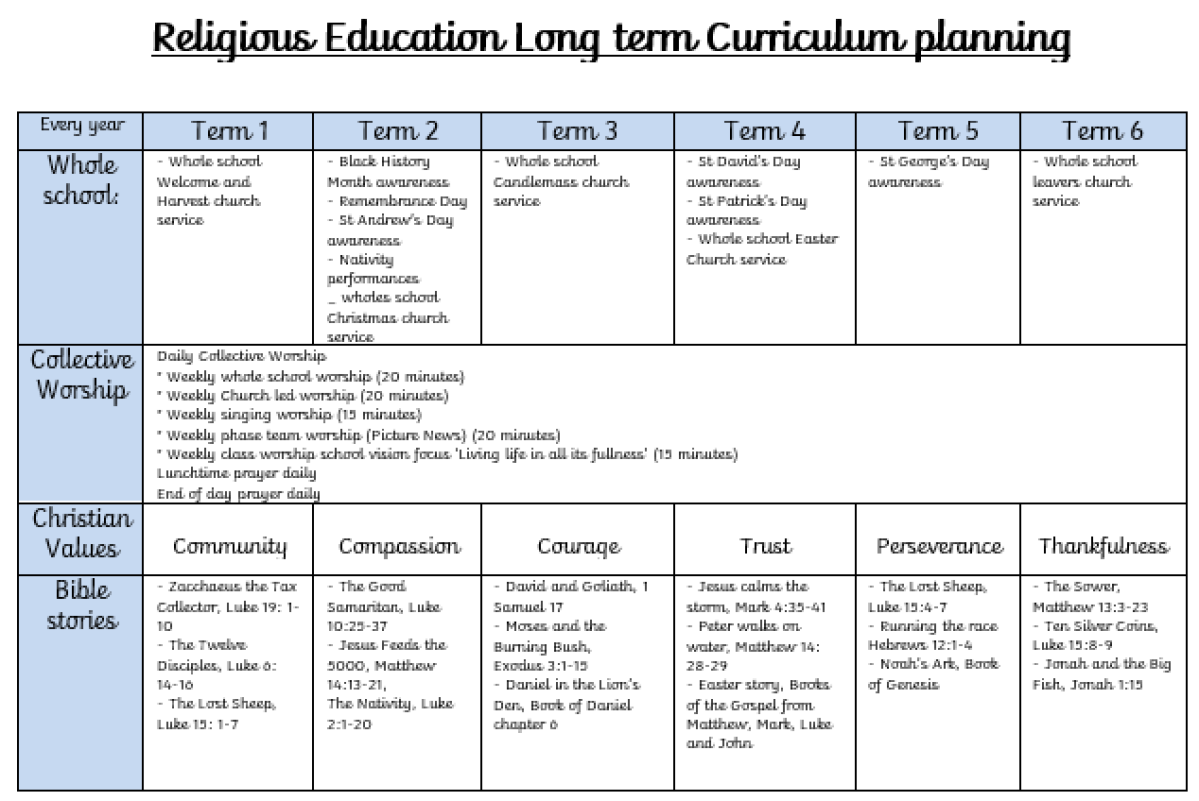
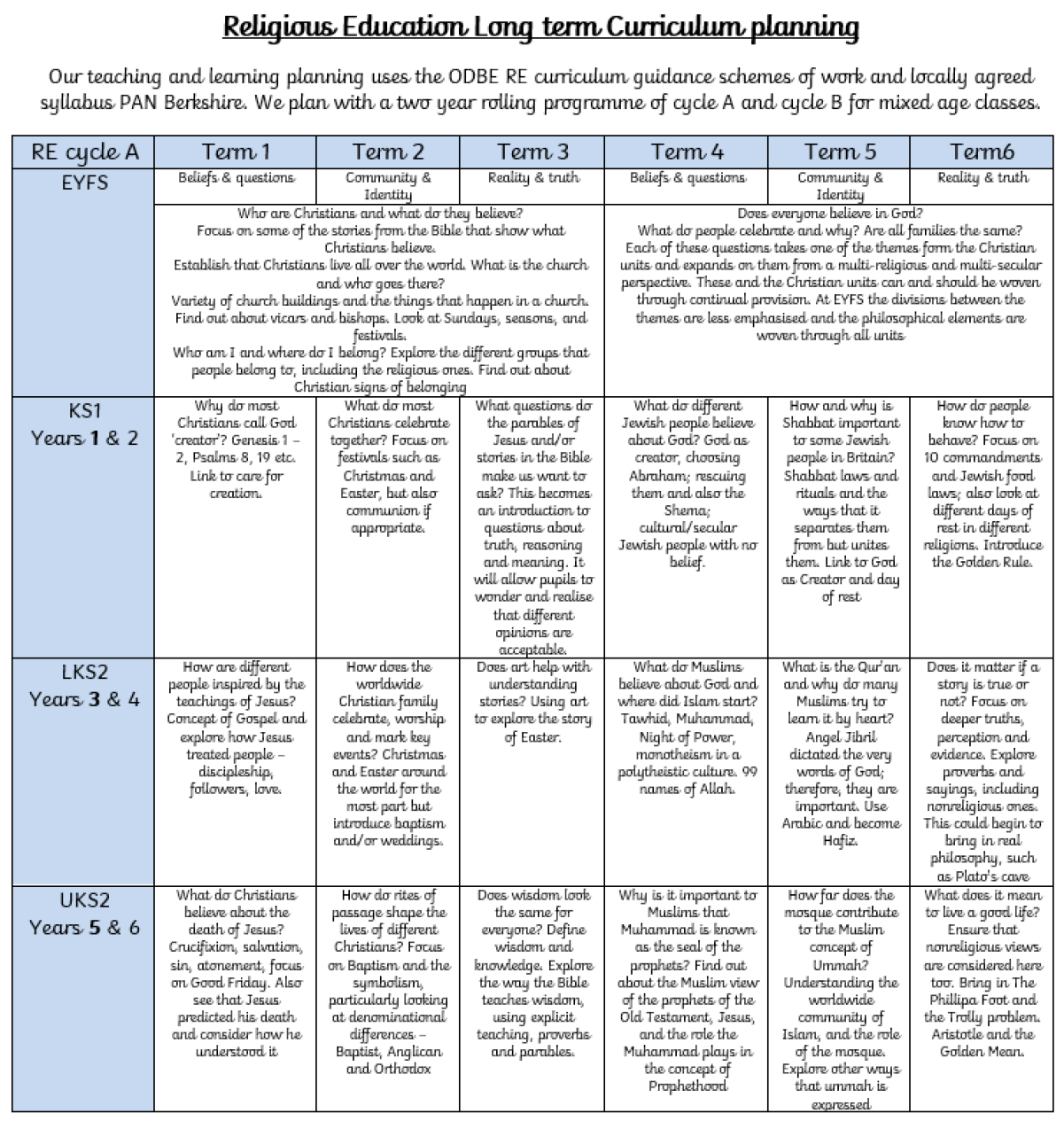
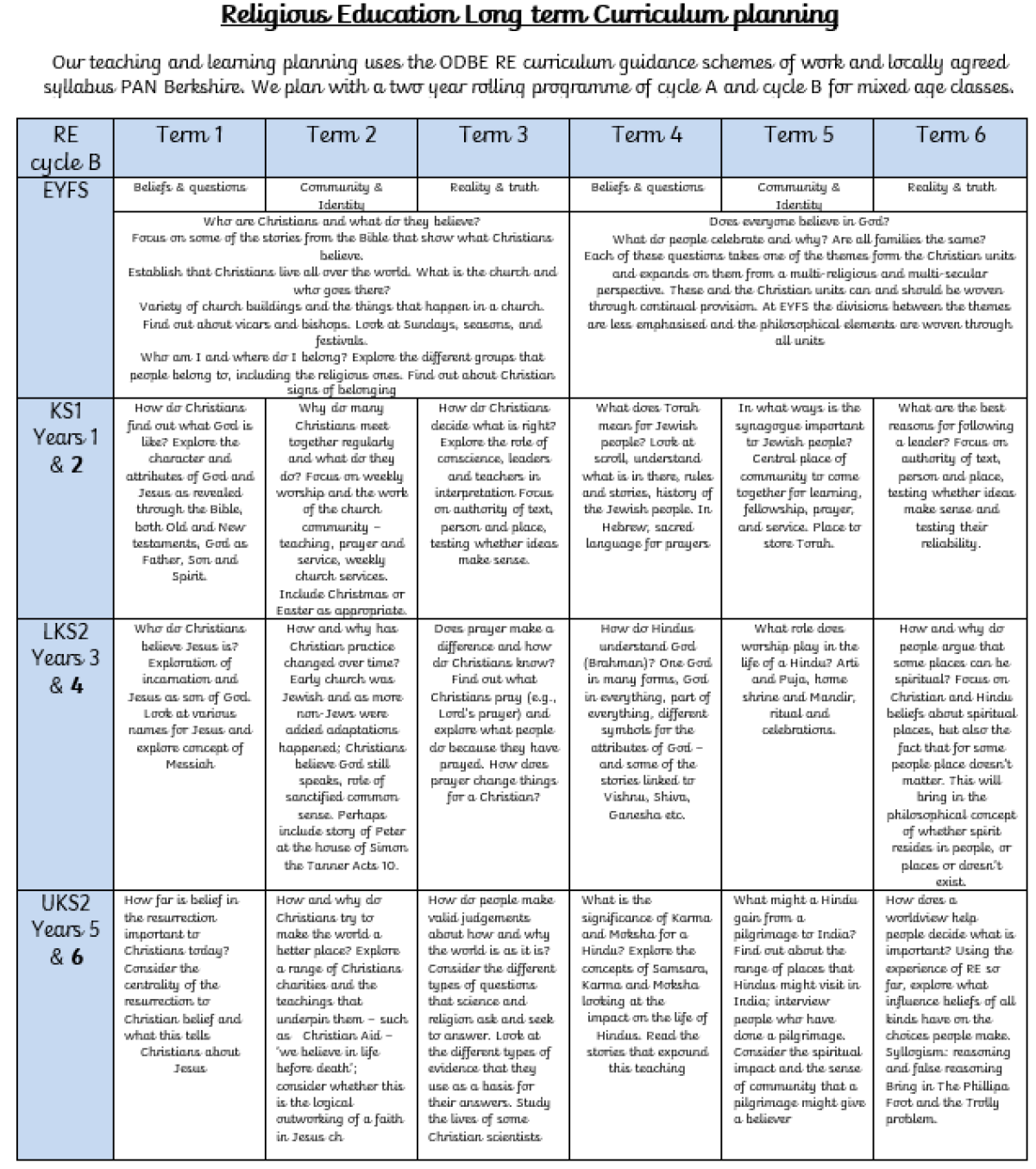
The RE curriculum at Chaddleworth & Shefford Federated Primary School, follows the Locally Agreed Syllabus. Christianity is taught in every year group, with key concepts revisited on a spiral curriculum. At least 50% of the time is devoted to Christianity. Other religions are covered according to the syllabus, e.g. Judaism in KS1, Hinduism & Sikhism/Islam in KS2.
The total time for RE is between 5% and 10%, and it is taught in dedicated weekly lessons. The time dedicated to RE is separate from the time given to Collective Worship. In KS1 this will amount to approximately 36 hours per year; in KS2 this rises to 45 hours per year.
Religious Education is generally taught on a weekly basis, but is sometimes delivered through a class topic or as a whole RE day, for example if visiting a synagogue or gurdwara.
Planning
RE is taught using an enquiry, question based approach, based on a Big Questions and investigative approach, as recommended by the Diocesan Scheme of Work, that is challenging and robust. Learning will be organised to encourage the development of attitudes such as self-awareness, respect for all, open-mindedness, appreciation and wonder, as well as providing opportunities to engage appropriately with Fundamental British Values. All faiths are treated respectfully, and opportunities will be made to engage in age-appropriate, meaningful discussion. Where possible pupils will encounter believers and visit places of worship.
Through critical thinking, personal reflection into their own thoughts and feelings, and their growing subject knowledge, the pupils will develop an understanding of the different religions and world views that will promote understanding, tolerance and acceptance in the society and world that we live in.
A variety of resources, styles, and techniques will be used as appropriate to enable all children to make progress in RE regardless of their starting points, ability or background. Our approach to teaching and learning of RE links to our school’s SEN and Equal Opportunities policies and the National Society for Education’s Flourishing for All (2024).
Progression and Assessment
Progression is planned through the units, building on previous knowledge, skills and understanding.
Assessment procedures will follow those of the Agreed Syllabus and be in accordance with other assessment and feedback procedures in the school. Students will engage in a variety of activities which will also enable teachers to assess what they have learnt, as well as the quality of the curriculum. Records kept will include information about pupils’ experiences and judgements about their progress, as well as being used to inform planning
Impact
Through critical thinking, personal reflection into their own thoughts and feelings, and their growing subject knowledge, the pupils will develop an understanding of the different religions and world views that will promote understanding, tolerance and acceptance in the society and world that we live in.
Monitoring
The RE subject leader and SLT will monitor teaching and learning in RE in accordance with school policy. The RE subject leader will observe teaching, conduct book and planning reviews and pupil interviews when appropriate to assess the quality of teaching and learning. The headteacher and governors will ensure that adequate monitoring takes place and that the impact of such activity is assessed.